Rhinoplasty consultation photos work best when they help you describe a concern and understand the surgeon’s explanation. Bring unedited photographs, separate your own images from inspiration pictures, and ask what a simulation can and cannot represent. A pleasing screen image is not an agreed surgical result. Before travelling to Korea, leave the consultation with written goals, the limits discussed and a clear understanding of what still needs an in-person examination.
On this page
Start with a question, not a perfect reference face
Write down what you want the consultation to resolve before choosing photographs. You might want to discuss a bridge contour in profile, an appearance concern from the front, or a change you have noticed since earlier surgery. Describe the situation in everyday language. A useful note says what you see and why it matters to you without diagnosing a structural problem from an image.
Choose a small set of priorities rather than presenting every feature as equally important. Include features you would prefer to preserve. For example, you might want to discuss a profile change while keeping your front appearance familiar. This gives the surgeon something concrete to assess and makes it easier to identify a proposed change you did not request. You can revise your priorities after hearing the clinical explanation.
Keep breathing and comfort questions visible even when your main interest is appearance. The American Society of Plastic Surgeons includes appearance goals, breathing, health history and previous treatment in its consultation guidance. A photograph can start that conversation, but a beautiful profile does not answer a breathing question. Tell the clinician about symptoms directly instead of expecting an uploaded image to communicate them. [American Society of Plastic Surgeons]
Prepare honest images for the clinic’s requested views
Ask the receiving clinic which views, file format and upload method it needs. Follow its photography instructions rather than treating this guide as a clinical photography protocol. The aim is to show your actual starting point clearly. Avoid beauty filters, facial reshaping, smoothing and edits that change the outline. Keep an original copy so there is no confusion about what the surgeon reviewed.
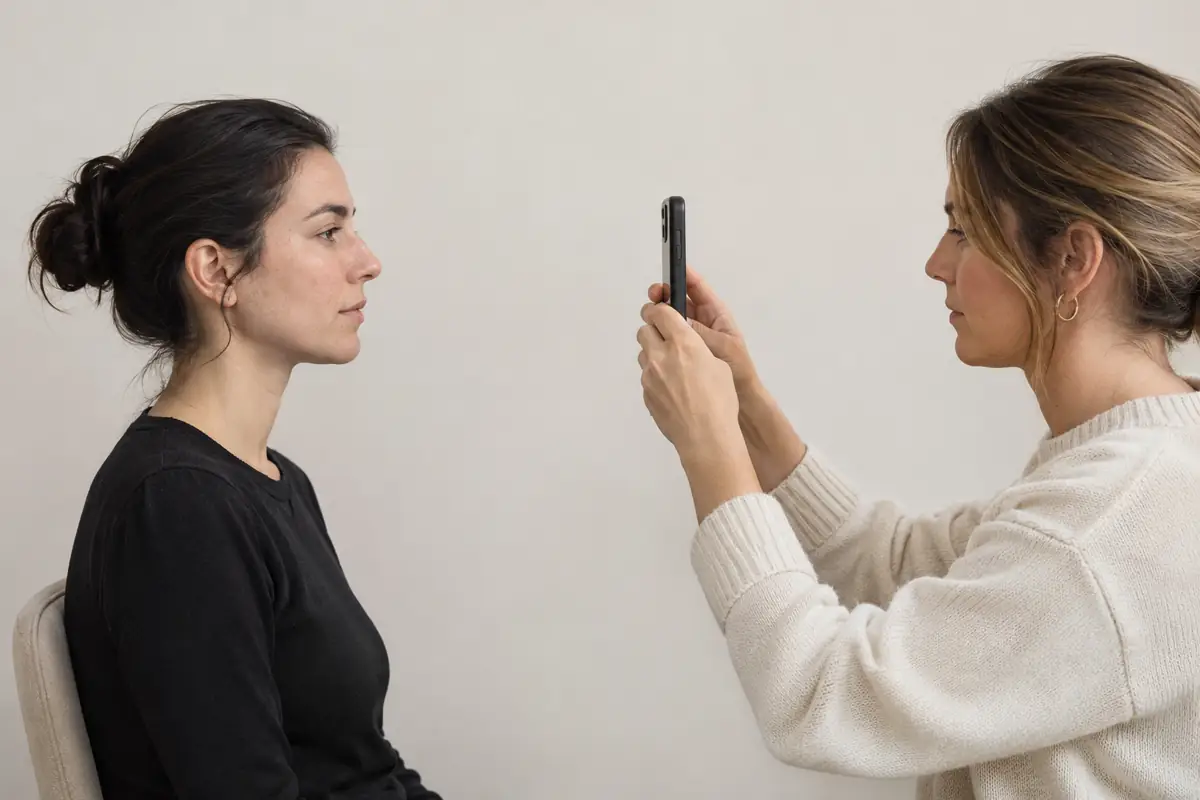
A plain background and clear, even lighting can make your concern easier to explain. Include enough of the face for context, keep the camera steady and avoid deliberately changing your expression to produce a preferred shape. If a friend helps, explain that the task is documentation, not a flattering portrait. The clinic may still need to retake photographs using its own standardized process.
Label photographs by date and view. If an image was taken before previous surgery, before an injury or during a period of swelling, say so. Do not mix those files into a current set without explanation. If lighting or distance differs substantially, mention that limitation. A short accurate note is more useful than trying to edit different photographs until they look comparable.
Separate your photographs, references and simulations
Create three clearly named groups: current unedited images of you, reference images showing a preference, and any simulation created during a consultation. These files answer different questions. Your images show what the clinician was sent. References help describe taste. A simulation records a discussion about a possible direction. Mixing them can make a remembered preference look like a promised outcome.
For each reference, write one sentence about what interests you. You may like a gentle profile line without wanting the person’s entire nose. You may dislike an appearance that looks too changed for your own preferences. Being specific lets the clinician explain whether the detail is relevant to your anatomy. You do not need to justify your preferences by calling another face ideal.
Avoid using an AI-generated face as proof that a surgical appearance is achievable. If you do bring an altered or generated image, identify it as such. Do not present it as a real postoperative result. Likewise, an image shared online without a reliable history cannot establish which procedures were performed or who performed them. Use uncertain images only to discuss visual preferences, with their uncertainty stated.
Read a simulation as part of the conversation
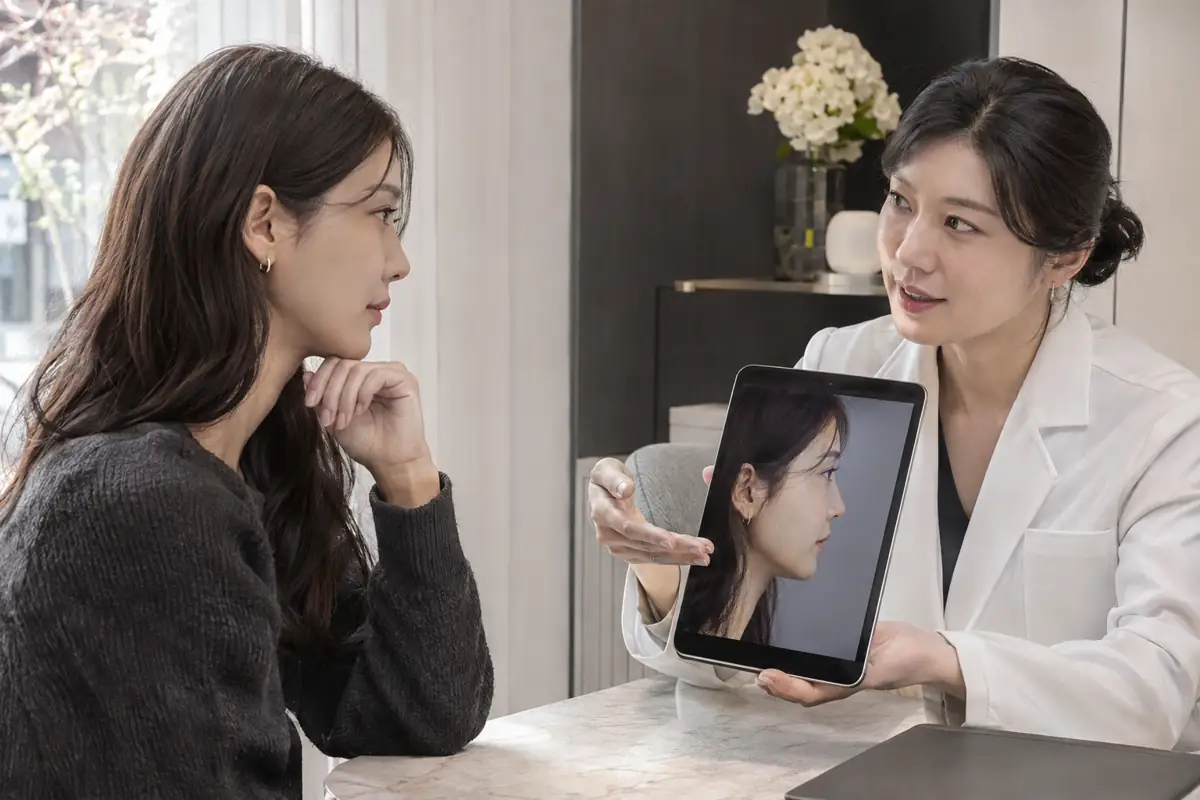
Mayo Clinic explains that photographs and computer changes can support a specific discussion of surgical goals. Ask the surgeon to show which changes in a simulation relate to the proposed operation, which are illustrative and which remain uncertain. The important output is an explanation you understand. A more sophisticated display does not remove the need for a personal assessment. [Mayo]
Discuss the simulated change from more than the most flattering view. Ask what the proposed direction could mean for the front, profile and oblique appearance, and which features the surgeon expects to leave alone. If the software shows only one angle, record that limit. Do not assume an attractive side view means that every other view has been assessed or can be predicted.
Ask directly: what could make the real result differ from this picture? The answer should be connected to your assessment rather than a general promise. Ask which uncertainties require an examination, what the surgeon thinks is unrealistic and whether a smaller change or no surgery deserves consideration. You are allowed to prefer a different direction or to decide that the uncertainty is greater than you wish to accept.
Translate visual agreement into plain written goals
After reviewing images, describe the plan back in your own words. A useful summary separates the concern, the proposed change and the limitation. Ask the surgeon to correct your understanding. If you are using interpretation, leave time for this exchange and ask that the clinician hear your questions directly. Agreement between you and a coordinator about an image is not the same as an assessment by the operating surgeon.
Keep a dated copy of the discussion summary and identify the simulation it refers to. Record who created it and which consultation it belongs to. If there are several versions, mark which one was discussed most recently. This is a practical way to avoid bringing an earlier, more dramatic image to a later consent discussion and assuming it still represents the plan.
A picture should not silently add procedures. If the conversation expands to another facial feature, ask whether that is an optional separate discussion, why it was raised and what happens if you decline. Take time to consider any additional proposal on its own. The goal of preparation is a clearer decision, not a longer list of operations.
Clarify privacy before sending identifiable photographs
Use the contact and upload route confirmed through the clinic’s official website. Before sending images, ask who receives them, how they are used for assessment and whether another organization is involved. Check that you have selected the intended recipient. Avoid uploading an entire phone album or including unrelated personal documents when only specific photographs were requested.
Ask separately about permission for clinical records, teaching and public marketing. Do not assume that agreeing to a consultation means agreeing to an online gallery. Request an explanation of the choices available and how you can raise a concern later. This guide does not establish the legal rules for your situation; it gives you questions to resolve with the organization handling your images.
If you use a companion’s phone, agree where the files will remain and who can access them. Keep a copy you can identify later, but avoid unnecessary sharing in group chats. A reference image of another person deserves care too: do not circulate private patient material or ask a clinic to disclose someone else’s identifiable medical records.
Use the same packet when comparing consultations
If you consult more than one surgeon, provide the same current photographs and basic history wherever possible. Otherwise, differences in advice may partly reflect differences in information. Record whether each opinion was based on photographs alone, a video discussion or an in-person examination. Those are not interchangeable assessment conditions.
Compare explanations rather than selecting the simulation you like most. Which concern did each surgeon understand? Which change did they consider realistic? What remained unanswered? If one proposal seems very different, return with the particular point of disagreement. Asking a focused follow-up is more useful than asking a new clinic to reproduce another clinic’s edited image.
Before booking travel, confirm what the preliminary consultation actually establishes. Ask which decisions can change after examination and what that means for a booking or quotation. Keep enough time to consider the final plan. A remote exchange may help organize your next step without settling whether surgery is appropriate for you.
A listed clinic to consider for this discussion
JNB Clinic
JNB Clinic is a relevant listed option to consider for a rhinoplasty consultation because its official service page describes assessment of nasal features and patient goals. Use the discussion to ask how your photographs relate to an individual examination and which aspects of the proposal remain uncertain. This is a service-based recommendation, not a claim that JNB is the best clinic for every patient.
Review its platform profile and official information before contacting the team. Ask whether photographic planning or simulation is offered for your appointment; this article does not promise a particular imaging system, interpretation service or result. Bring your concise image packet and request an explanation of the limitations you would need to accept.
Questions and answers
Do I need professional photographs before contacting a clinic?
Ask the clinic what it requires. A clear, unedited set made according to its instructions may be useful for an initial exchange, while the clinic may take its own photographs later. Do not spend money on a photography session before checking whether those files would serve a purpose.
Can a simulation guarantee my result?
No. Use it to clarify a proposed direction and the limits discussed with the surgeon. Ask for those points in words and keep the original image separate from the simulation. Neither a photograph nor a rendered model replaces assessment, informed consent or the uncertainty of healing.
What should I leave the consultation with?
Keep a short account of your priorities, the surgeon’s explanation, the proposed changes, unresolved questions and the next assessment step. Include the date and relevant image version. If you cannot explain the plan without pointing at a picture, ask for another discussion before making a decision.