On this page
If breathing became harder after rhinoplasty, the next step is an assessment of the obstruction, not automatically another cosmetic operation. Tell the clinician what changed, when it changed and how it affects daily life. A straight-looking nose or an attractive postoperative photograph cannot establish whether the airway is functioning well. Your symptoms deserve to be considered separately from satisfaction with the shape.
This guide is for people considering an assessment in Korea after earlier nasal surgery, including patients traveling from the United States. It helps you prepare a useful history, compare explanations and plan care across countries. If you have severe difficulty breathing, uncontrolled bleeding or rapidly worsening symptoms, seek urgent local medical care instead of waiting for an overseas consultation.
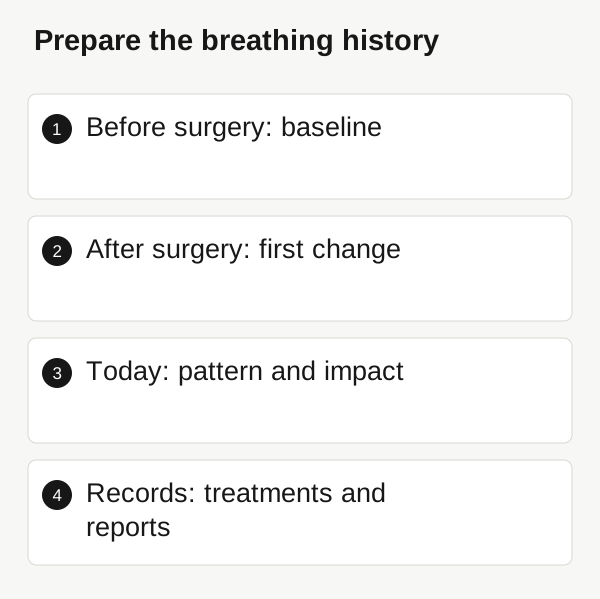
Start with the timing and pattern of the problem
Write a short timeline that begins before the original surgery. Could you breathe comfortably through your nose then? Did you have allergies, a prior injury or an earlier septal operation? Record when the current problem first appeared and whether it has improved, worsened or stayed similar. Distinguish what you observed from an explanation you were given. “The right side feels blocked when I exercise” is a useful observation; the cause still needs assessment.
Note whether one side or both are affected, whether the problem changes during the day and whether it disrupts sleep or exercise. Include any nosebleeds, discomfort or other symptoms without trying to fit them into an online diagnosis. A brief diary over ordinary activities can help you explain the pattern. You do not need to provoke symptoms or repeatedly test your breathing. If the problem is acute or worsening, seek care rather than delaying until your record is complete.
Several structures can contribute after surgery
A clinical review of obstruction after rhinoplasty describes several possible areas of concern, including the septum, nasal valves, tip, nostrils and internal lining. Previous surgery and the condition of the tissues matter when interpreting these findings. More than one contributor may be present. That is why the question “Which operation fixes breathing?” is less useful than “Which findings explain my symptoms, and what treatment addresses each one?”
Ask the examiner to describe the relevant area in everyday language or show it on a simple sketch. If you receive several unfamiliar diagnoses, ask which is thought to be the main contributor and how confident the clinician is. Do not assume that every irregularity seen during examination needs an operation. The proposed treatment should connect a finding to the symptoms you want to improve and explain what uncertainty remains.
What a nasal-valve assessment can and cannot show online
The nasal valves are areas involved in regulating airflow through the nose. AAO-HNS guidance describes valve dysfunction as narrowing or collapse and bases its diagnosis on the history and physical examination. Photographs do not reliably diagnose internal valve collapse, and CT scans do not measure dynamic collapse. Endoscopy can help identify other causes of obstruction when appropriate. A scan should therefore answer a particular clinical question, rather than replace the entire assessment.
For an online consultation, ask what the team can usefully review before you travel and which decisions require an examination. Sending a video or photograph may help communicate your concern, but it should not lead you to perform forceful self-tests or manipulate a recently operated nose. If the clinic offers a preliminary plan, mark it as preliminary in your notes. Ask what findings could change the procedure, quote or timing after you arrive.
A previous septoplasty does not answer every airway question
Tell the clinician whether septoplasty, turbinate treatment or another functional procedure was performed with your rhinoplasty. Bring the operation report rather than relying only on the procedure name. AAO-HNS distinguishes nasal-valve repair from septoplasty: these treatments may complement one another, but septoplasty does not substitute for treatment of a valve problem when that problem is present. This distinction helps explain why simply repeating a familiar operation is not a complete plan.
If the new surgeon recommends a procedure you have already had, ask what is different this time. Which finding remains, which step is proposed and what limits improvement? If they recommend another type of treatment, ask how it relates to the original work. Avoid interpreting a different recommendation as proof that the first surgeon made an error. The useful goal is an accurate current assessment and an understandable plan, with records available to support both.
Discuss nonsurgical care without assuming it solves structural problems
Ask whether inflammation, allergies or other treatable conditions may contribute to the symptoms. Give the clinician a complete list of treatments you have tried, including how they were prescribed and what happened while using them. Do not start, stop or increase medication simply because an article describes another patient's experience. The clinician needs to distinguish treatment for a possible inflammatory contributor from treatment for a structural problem.
The clinical consensus on nasal-valve compromise emphasizes examination findings alongside the patient's symptoms when choosing treatment. Use that approach when comparing options: ask what a proposed trial of treatment is intended to test, how long the clinician wants to assess it and what would lead to a different plan. Where surgery is recommended, ask whether reasonable alternatives remain. Where observation is recommended, request a review point and advice about changes that should prompt earlier contact.
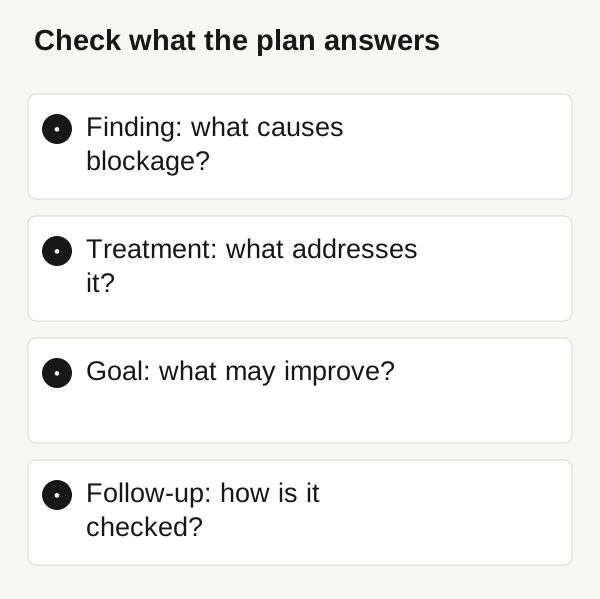
Agree on a breathing goal before discussing cosmetic refinements
Describe the daily problem that matters most: waking with a blocked nose, difficulty during a familiar activity or persistent obstruction on one side. Ask which of these concerns the proposed treatment is expected to address. A statement that the nose will be “more open” may be difficult to evaluate without a shared baseline. Ask how the clinic records symptoms and how they will compare your progress at follow-up. A questionnaire may help structure that conversation if the clinician uses one.
If you also want the nose to look different, make a second list of appearance goals. Ask whether the functional plan could change the visible shape and whether a desired cosmetic change would conflict with the airway goal. Do not assume every appearance concern has to be corrected during the same operation. You should understand the functional purpose, optional refinements and tradeoffs before agreeing to a combined procedure. Keep both sets of goals in the written consultation summary.
Prepare records that explain the earlier operation
Request the original operative report, material or implant information and any record of cartilage harvesting. Add the discharge summary and subsequent treatment for complications if relevant. Before-and-after photographs can document shape, while earlier clinical notes may explain the airway assessment. Label the dates and avoid rearranging the record to make the outcome look better or worse. A receiving clinician needs the sequence, including periods when symptoms improved.
If records are unavailable, tell the new clinic rather than postponing assessment indefinitely. List what you know and what you are unsure about. Ask whether the original provider can send the report directly with your permission and whether a translation is needed. Keep your own copy. A useful summary can fit on one page, with the detailed documents attached, so the consultation spends less time reconstructing dates and more time discussing the current findings.
Compare clinical reasoning when opinions differ
Two consultations may result in different recommendations. Ask each clinician to name the main cause they identified, explain the proposed treatment and describe what could remain afterward. If one recommends surgery and another recommends observation or medical treatment, ask which finding or uncertainty accounts for that difference. Do not choose solely by counting endorsements or selecting the plan with the longest list of procedures.
A second opinion is especially useful when you cannot explain the first recommendation in your own words or when the proposed scope is much larger than expected. Bring the same history to both consultations so the comparison is meaningful. Ask about experience with the particular airway problem, not only the number of cosmetic rhinoplasties performed. Relevant before-and-after photographs can support a discussion about shape, but they cannot demonstrate how another patient breathes or predict your functional improvement.
Separate the functional quote from elective appearance work
Ask for a written quote that distinguishes assessment, the proposed functional treatment, any cosmetic changes, anesthesia and follow-up. Clarify what could change after examination and whether material or donor-site work is included. If more than one clinician is involved, find out who performs each component and who takes responsibility for persistent obstruction afterward. A single package name can conceal differences that matter to both consent and cost.
US patients should ask their insurer directly about coverage and documentation before assuming that treatment abroad will be reimbursed. A diagnosis or a clinic's statement that a procedure is functional does not establish eligibility under your policy. Ask separately about evaluation and follow-up after returning home. Keep a financial contingency for a changed trip or additional assessment, and clarify cancellation terms before paying for an operation whose final scope is still provisional.
Arrange follow-up that checks function, not only photographs
Ask the treating clinic when breathing will be reassessed and what symptoms they expect to review at each stage. A photo check may answer a visible healing question but not every internal concern. Establish when an in-person examination is needed and how to obtain one after leaving Korea. If you already have a US ENT clinician, discuss the intended handover before travel and confirm what follow-up they are willing to provide.
Bring home the final operation report, material details and a clear treatment plan. Keep the symptom baseline so you can describe change without relying only on memory. If symptoms persist, ask what the next assessment will consider rather than concluding immediately that another operation is required. If they worsen acutely, use local medical services. An international messaging channel is useful for communication, but it is not a substitute for timely emergency care or a necessary examination.
A listed clinic for an airway and revision discussion
Kobijou Rhinoplasty Clinic
Kobijou Rhinoplasty Clinic is a relevant listed option because its official information covers functional and aesthetic rhinoplasty, including revision care. Its revision page discusses breathing and septal concerns as part of the assessment. Review the clinic profile and ask whether the team can evaluate the specific changes you experienced after your earlier operation.
Send your symptom history and prior operative report before the appointment if the clinic requests them. Ask which clinician will examine the airway, what can be decided remotely and how functional follow-up would continue after you return home. The service listing supports a consultation inquiry; it does not confirm a diagnosis or establish that surgery is needed.
Read the Kobijou clinic profile
Ask Kobijou about an airway assessment
This recommendation reflects the relevant services it describes, not a clinical ranking or a promised result.
Questions patients ask
Does a blocked nose after rhinoplasty always mean I need revision?
No. The cause and timing need assessment. Ask whether healing, an inflammatory condition, a structural issue or several contributors are relevant, and what observation or treatment is appropriate. A revision decision should follow an explanation of the findings and expected benefit.
Can a CT scan prove that my nasal valve collapses?
AAO-HNS notes that CT does not measure dynamic collapse. A clinician should explain what a scan is intended to evaluate and combine appropriate information with your history and examination. More testing does not automatically mean a more complete explanation.
Can functional revision guarantee normal breathing?
No individual outcome can be guaranteed. Ask which symptoms are expected to improve, what may remain, how progress will be reviewed and what would happen if obstruction persists. Those details are more useful than a promise based on a procedure name.