On this page
Previous nose filler does not answer whether you are suitable for rhinoplasty. It does change the information the surgeon needs before planning surgery. The product, injection history, current tissues and your goals all belong in the assessment. If you are considering rhinoplasty in Korea after filler, start by gathering the records rather than booking a dissolution appointment or choosing a fixed waiting period from social media.
The key decisions are what material is present, whether treatment before surgery is appropriate and when the nose can be reassessed for the proposed operation. These decisions should be coordinated with the treating clinicians. This guide helps US patients prepare that conversation and plan travel without treating filler removal as a simple administrative step.
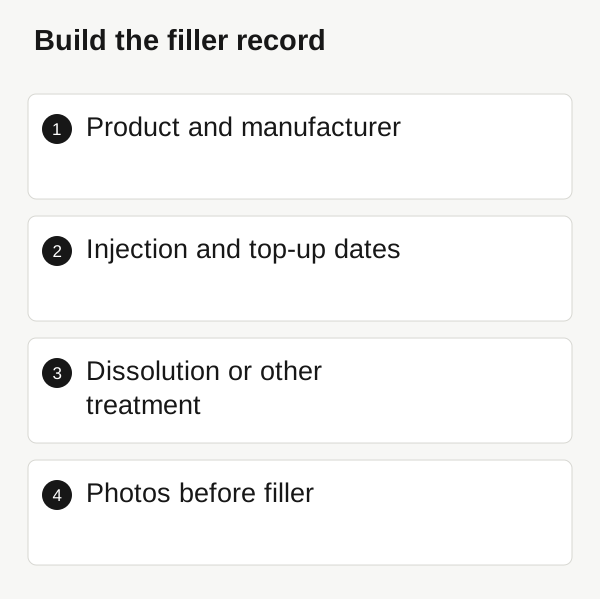
Find the product name, not just the label “nose filler”
Request the injection record from every clinic that treated your nose. Ask for the product and manufacturer, dates, amount used where recorded, treatment areas and any later dissolution or complication treatment. A receipt for a “liquid nose job” may not identify the material. If the record includes a product sticker or lot information, keep it with the report. Send clear copies rather than trying to translate unfamiliar brand names from memory.
Hyaluronic acid, often shortened to HA, is not the only type of filler. A clinician's plan for one material should not be assumed to work for another. The FDA notes that removal can be difficult or impossible for some fillers, especially permanent materials or those not made from HA. If the product is unknown, say so explicitly. The next clinician can explain what information or assessment may help, rather than starting from an unverified assumption that everything is dissolvable.
Build a timeline that includes top-ups and earlier surgery
List the first injection and every later top-up, even if each treatment seemed small. Add any dissolution sessions, the reasons for them and how the nose changed afterward. Include previous rhinoplasty, an implant, threads, injury and treatment for swelling or other concerns. The surgeon needs the whole history rather than only the date of the most recent injection. If dates are approximate, label them that way.
Bring photographs from before filler if you have them, as well as recent images. Explain which version of the nose you are trying to change: the original shape, the current shape or a feature you liked after an injection. Photographs are communication tools, not measurements of remaining material. Avoid editing images or choosing only the angle you dislike most. A consistent set helps you describe your priorities without implying that a photograph alone establishes what treatment is needed.
Clarify the goal that filler did not meet
Write down why you are considering surgery now. You might want a different contour, be tired of repeated injections or have a concern that filler was never intended to address. Separate appearance goals from symptoms such as breathing difficulty or discomfort. Ask the surgeon which goals belong to the surgical plan and which need a separate medical assessment. Do not assume that changing from an injectable procedure to surgery solves every concern at once.
It can help to describe one or two priorities rather than bringing a long list of other people's noses. If you liked the bridge after filler but disliked the width from the front, say that. If you want the nose to be smaller, ask how the surgeon evaluates that request in relation to the underlying structure. The consultation should explain realistic changes and limits in your case, including what may look different after filler treatment before any surgery occurs.
Discuss dissolution as a medical procedure
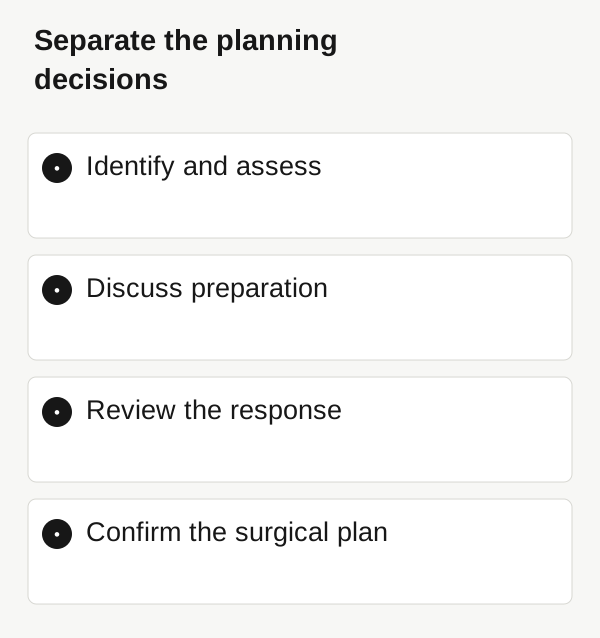
For some HA fillers, clinicians may consider hyaluronidase as part of preparation. Do not purchase dissolving products, attempt injections yourself or ask an unrelated provider to follow a schedule chosen online. Ask who will assess you, who will perform any proposed treatment, what risks and alternatives they will explain and how the response will be reviewed. A plan should identify the reason for dissolution rather than treating it as mandatory for every person with any history of filler.
ASPS patient information discusses different approaches to managing filler before rhinoplasty and the importance of being able to assess the underlying nose. Use this to ask your surgeon what information they need before choosing an approach. If one clinician recommends dissolution before travel and another wants to examine you first, ask them to explain the difference. Avoid arranging treatment solely to meet a flight date; the surgeon planning the operation should know what is being done and when.
There is no single waiting period you can safely apply to everyone
A 2025 cross-sectional study surveyed surgeons about their practices around prior nasal filler and rhinoplasty. Reported practice is not the same as evidence proving one optimal interval for every patient. Differences in material, previous treatment and the current examination mean that a timetable needs a reason. Ask what the clinician wants to reassess before confirming surgery and what could lead to a delay.
Separate three dates in your planning: the consultation, any preparatory treatment and the operation. They do not have to be booked as one fixed package. If dissolution is proposed, ask when the clinician wants to review the response and whether more than one visit could be necessary. Make sure the cancellation or rescheduling policy covers a recommendation to wait. A nonrefundable flight should not become pressure to proceed before the clinical plan is settled.
Unknown or permanent filler needs its own discussion
If you were told that a product was permanent, or you cannot identify it, tell the receiving clinic before paying for a surgical booking. Ask whether they assess that material and what limitations may affect treatment. Do not describe the product as HA simply because another clinic commonly uses HA. A missing record is an uncertainty to manage, not a detail to hide out of concern that the clinic will refuse the appointment.
Ask the surgeon to distinguish what they know, what they suspect and what remains uncertain. If an examination, imaging or another opinion is proposed, request the reason and how it could change the plan. Do not assume that any scan proves every trace of material is absent. Before consenting, ask what happens if the findings differ from expectations and which changes to the procedure you would need to consider separately. A clear uncertainty discussion is more useful than a promise of complete removal.
Know which symptoms should not wait for surgical planning
The FDA identifies unintended injection into a blood vessel as a serious filler risk, with possible tissue injury, vision problems and stroke. New vision changes, severe unusual pain or concerning skin-color changes around an injection need immediate medical attention; do not wait for an overseas clinic to reply. Tell the treating team what was injected and when, if known. Recent injection complications are a different situation from routine planning for elective rhinoplasty.
For US readers, the FDA also states that injecting filler into the nose is not an approved use. This is US regulatory information, not a statement of Korean law or an individual diagnosis. A filler product's approval for another facial area should not be presented as approval for every use. Discuss your own history honestly with the clinician without assuming that an apparently uneventful earlier injection eliminates the need for assessment before surgery.
Coordinate the injector and surgical team before a trip
Ask the Korean clinic which records it wants from your injector and whether it prefers to assess you before any further treatment. With your permission, the clinicians may exchange a concise treatment summary. Keep yourself included in the communication so you know which recommendations are confirmed and which are still provisional. A coordinator can help arrange documents, but clinical questions should reach the clinician responsible for the plan.
If preparatory treatment takes place in the United States, ask who will review the result and what the Korean surgeon needs before confirming the next step. If it takes place in Korea, ask whether the trip must allow for reassessment rather than assuming surgery will follow immediately. Confirm language support for both visits. The purpose is continuity: the surgeon should not discover a new injection or dissolution session only after you arrive for an operation.
Make the quote and consent reflect the actual pathway
Ask for separate costs for assessment, any proposed filler treatment, reassessment and surgery. Clarify which fees are estimates and which may change after the examination. If a package includes “filler removal,” ask what procedure that means, who performs it and whether additional visits are included. A low bundled price is difficult to compare if one plan assumes a single visit and another allows for a staged decision.
Read the refund and rescheduling terms before making travel commitments. Ask what happens if you are advised against surgery or if the material cannot be managed as initially expected. Include accommodation, flight changes and follow-up at home in your budget. Do not assume US insurance will cover preparatory care or a complication associated with elective treatment abroad; ask the insurer about your circumstances. The financial plan should leave room for a clinical recommendation to pause.
Keep expectations separate before and after filler treatment
If the appearance changes after preparatory treatment, ask when and how the surgeon wants to reassess the baseline. Do not rush to judge a final surgical result before surgery has even occurred. Keep dated photographs with comparable lighting and distance, and record new symptoms without repeatedly manipulating the nose. Tell the team if your preferences change once you see the nose without the effect you associated with filler.
At the final surgical consultation, review the goals again rather than assuming the first online simulation still applies. Ask what the surgeon now proposes, what remains uncertain and whether the agreed scope has changed. Obtain the final operation record and any material information afterward. Follow-up should address the actual procedures you received, including preparatory treatment, rather than relying on generic instructions written for someone with no previous filler history.
A listed clinic to discuss rhinoplasty after filler
JNB Clinic
JNB Clinic is a relevant listed option because its official website lists pre-rhinoplasty filler removal alongside rhinoplasty services. Review the clinic profile and ask how it evaluates your particular product and injection history before recommending preparation or surgery. Its service listing does not mean that every filler can be dissolved or that removal is necessary in every case.
Send the injection records and any previous operation details when requesting an assessment. Ask who would perform preparatory treatment, when the response would be reviewed and which decisions require an examination in Korea. Request a written sequence and an itemized estimate before arranging the trip.
Ask JNB about assessment after nose filler
Selection reflects the relevant service it lists, not a clinical quality ranking or a guarantee of suitability.
Questions patients ask
Do I need to dissolve every old nose filler before rhinoplasty?
That is a clinical decision based on the material, history and examination. Tell the surgeon about all previous injections, even old ones. Ask why a proposed approach is appropriate and what information is needed before the operation is confirmed.
Can I assume filler has disappeared because I no longer see the effect?
Do not use appearance alone as proof of what material remains. Share the product record and dates with the surgeon and ask how they will assess the current situation. A fading cosmetic effect does not replace a treatment history.
Can dissolution and surgery fit into one short Korea trip?
Ask the treating clinicians before booking. A plan may require reassessment, and the response to preparatory treatment may affect timing. Build flexibility into the itinerary and ask what circumstances would lead to postponement rather than relying on a guaranteed package schedule.
Is liquid silicone the same as a solid nasal implant?
No. An injection history and a surgically placed implant are different issues. Tell the clinician which you had and provide records when possible. If you are unsure, avoid choosing an implant-removal or filler-dissolution procedure until that uncertainty has been discussed.